
Commercial doors do far more than provide a way into and out of a building. They help control the movement of fire and smoke, protect restricted areas, support accessibility, strengthen security, and provide occupants with a safe exit during an emergency.
Because doors perform so many essential functions, building owners and facility managers must look beyond whether a door simply opens and closes. Damaged hardware, failed seals, improper modifications, alignment problems, or incompatible security equipment can prevent a door from functioning correctly when it matters most.
A comprehensive approach to commercial doors & hardware can improve building safety, support compliance, reduce operational disruptions, and protect both people and property.
Fire Door Inspections and Compliance
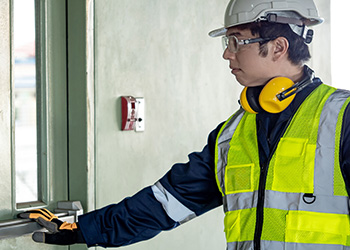 Fire doors are designed to protect openings in fire-rated walls and other fire-resistance-rated assemblies. When properly installed and maintained, they can help slow the movement of fire and smoke from one area of a building to another.
Regular fire door inspections help identify conditions that could prevent a rated door assembly from performing as intended. An inspection may include checking:
- The door, frame, hinges, and hardware
- Door alignment and clearances
- Closing and latching functions
- Fire labels and ratings
- Glazing and vision panels
- Gasketing and edge seals
- Holes, damage, or field modifications
- Obstructions that prevent closing
- Compatibility between locks, closers, operators, and access systems
A fire door that has been propped open, damaged, incorrectly repaired, or fitted with incompatible hardware may no longer provide the intended level of protection.
Maintaining fire door compliance involves more than completing an inspection. Any deficiencies should be documented and corrected by qualified professionals who understand rated door assemblies. Common compliance concerns include doors that do not fully close, latches that fail to engage, excessive gaps, missing labels, damaged frames, improper locks, blocked doorways, and unauthorized modifications for wiring or access devices.
NFPA 80 addresses the installation and maintenance of fire doors and other opening protectives. Applicable requirements can vary based on the building, occupancy, door rating, local code, and authority having jurisdiction.
NFPA 105 and Smoke-Tight Doors
Although fire doors are associated with controlling fire, smoke may create an equally serious hazard. Smoke can travel rapidly through corridors, stairwells, door openings, and other pathways, reducing visibility and threatening occupants far from the source of a fire.
NFPA 105 establishes requirements for smoke door assemblies and other opening protectives designed to help limit the movement of smoke.
Properly functioning smoke tight doors, also commonly written as smoke-tight doors, depend on several components working together. These may include the door and frame, smoke seals, gasketing, closers, latching hardware, proper clearances, and correct installation.
A damaged seal, warped door, misaligned frame, or failed closer can reduce the effectiveness of the assembly. Smoke doors should therefore be included in a facility’s preventive maintenance and life-safety inspection program.
Commercial Door Repair or Replacement
 Not every door problem requires a complete replacement. Professional commercial door repair may resolve problems involving closers, hinges, locks, exit devices, panic hardware, thresholds, weather seals, or alignment.
Repair may be appropriate when the door and frame remain structurally sound and the work can be completed without compromising a required listing or fire rating.
However, commercial door replacement may be necessary when:
- The door or frame has extensive damage
- Corrosion has weakened the assembly
- The door cannot be properly aligned
- Previous modifications have affected its integrity
- Replacement parts are no longer available
- Security or accessibility needs have changed
- Repeated repairs are no longer cost-effective
Rated doors should not be drilled, cut, or modified without considering how the work may affect their compliance. Repairs and replacements involving fire-rated or smoke-control openings should always be carefully evaluated.
Commercial Doors & Hardware as a Complete System
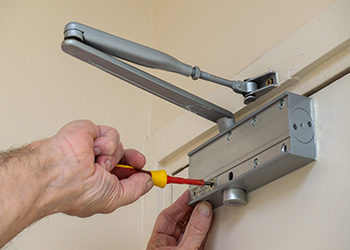 A commercial door is only as dependable as the components surrounding it. Commercial doors & hardware should be treated as complete systems rather than individual products.
A typical opening may include a door, frame, hinges, locksets, exit devices, closers, thresholds, gasketing, protection plates, automatic operators, electronic locks, card readers, and monitoring devices. Every component must be appropriate for the door’s construction, rating, location, use, and expected traffic. Hardware added for convenience or security should never interfere with closing, latching, accessibility, or evacuation.
Access Control and Door Security
 Modern access control systems allow businesses to manage who can enter buildings, rooms, and restricted areas. Credentials may include key cards, fobs, mobile devices, keypads, or biometric identification.
Access control can help:
- Limit entry to authorized personnel
- Record access activity
- Manage permissions remotely
- Reduce dependence on traditional keys
- Quickly deactivate lost credentials
- Integrate doors with alarms and cameras
However, an electronically secured door must still comply with applicable fire, building, accessibility, and life-safety requirements.
Locks, sensors, request-to-exit devices, power supplies, fire-alarm interfaces, and door hardware must work together correctly. Access systems should strengthen door security without preventing occupants from exiting safely during an emergency.
Commercial Door Automation
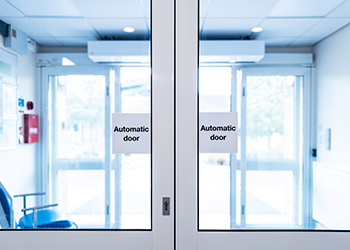 Commercial door automation can improve accessibility, sanitation, traffic flow, and convenience. Automatic operators are frequently used in healthcare facilities, schools, offices, retail locations, and public buildings. Automated systems may include push plates, touchless sensors, motion sensors, safety sensors, electric locks, and access-control interfaces.
These systems must be properly selected, installed, adjusted, and maintained. An operator that closes improperly, lacks adequate safety detection, or conflicts with locking hardware may create both operational and safety concerns.
Emergency Egress and Ingress/Egress
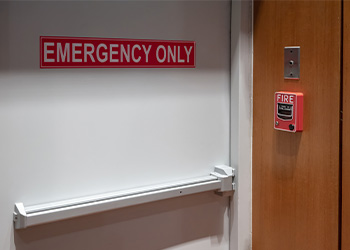 Strong security is important, but occupants must still be able to leave a building quickly and safely. Emergency egress may be compromised by blocked exits, malfunctioning hardware, improper secondary locks, failed electronic releases, or doors that bind or drag. Exit routes should be easy to recognize and use. Required egress should not depend on complicated actions or electronic systems that may remain locked during an emergency.
The terms Ingress/Egress describe movement into and out of a building or protected area. Ingress generally concerns how authorized occupants, visitors, vendors, and emergency personnel enter. Egress concerns how people exit, particularly during an emergency.
A well-designed door system should provide controlled ingress, accessible everyday entry, reliable emergency egress, proper operation during alarms or power failures, and appropriate access for first responders.
Take a Proactive Approach
Waiting until a commercial door stops working can lead to security risks, compliance concerns, operational delays, and costly emergency repairs.
A proactive program should include identifying rated doors, scheduling inspections, documenting deficiencies, testing closing and locking functions, reviewing automation and access-control equipment, and keeping exits clear.
By addressing fire door inspections, fire door compliance, NFPA 105, smoke tight doors, commercial doors & hardware, commercial door repair, commercial door replacement, access control, commercial door automation, door security, emergency egress, and Ingress/Egress, building owners can create safer, more accessible, and more reliable facilities.
Commercial doors should not be treated as isolated pieces of hardware. They are integrated safety and security systems that help protect people, control access, and preserve safe exit routes when every second counts.
 MB HAYNES CORPORATION makes delighting customers our top priority. Headquartered in beautiful Asheville, NC, MB HAYNES leads the way in providing skilled expertise to industrial, institutional, commercial and residential customers.